Black Sea ship strikes test NATO red lines as war widens
Nine cargo ships have been hit near Romania and Bulgaria since October, and analysts say Moscow is probing how far NATO will go.
 By Henrik LindqvistEurope correspondent 2 min read
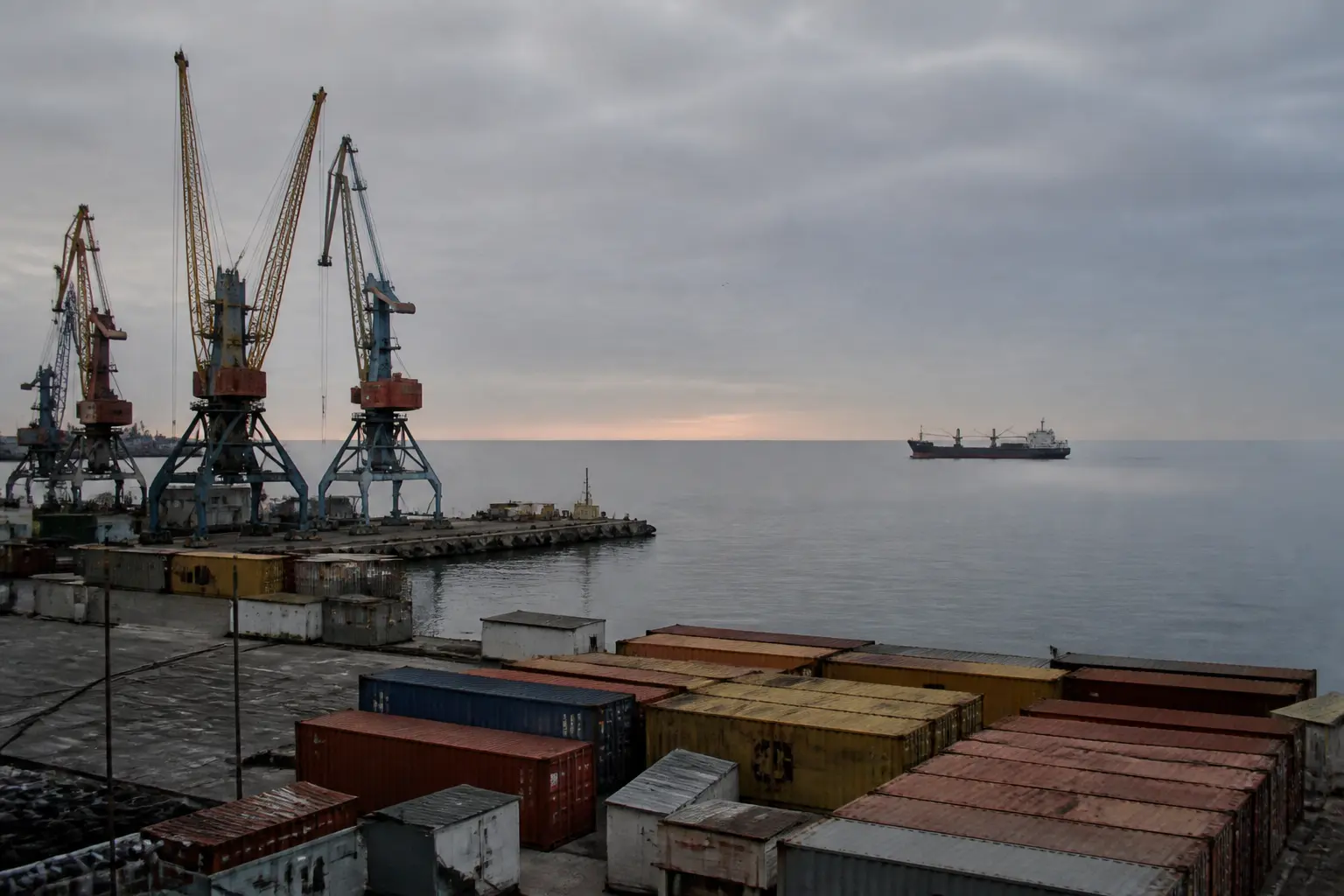
Bucharest — The maritime war between Russia and Ukraine has spread to the doorstep of NATO's eastern flank, with nine commercial vessels struck near Romania and Bulgaria since the start of October, according to CNA. The attacks continued even after the alliance announced reinforcements.
After seven strikes on cargo ships near the two member states last month, NATO said it would deploy maritime patrol aircraft, radars and drones to bolster its eastern flank in the Black Sea. Three days later, on Oct 23, another ship was struck just outside Romanian waters. Last week a Greek container ship was sunk by naval drones in Bulgaria's exclusive economic zone, The Japan Times reported.
Many of the vessels hit in October were anchored near, or sailing to or from, a key Romanian canal used by Ukraine for exports. One was inside Romanian territorial waters; the other eight were in Romania's or Bulgaria's exclusive economic zones.
No government has formally attributed the attacks, but military analysts quoted by the outlets said they had little doubt they were Russian. A naval drone seen on video of the most recent strike resembled a Russian variant, according to shipping security firm Ambrey. Sidharth Kaushal, a senior fellow at the London-based RUSI think-tank, called it "undeniably an escalation".
Russia denies targeting Ukraine's neighbours with drones and says European governments are the ones escalating the war by supplying military aid. Its defence ministry did not respond to a request for comment.
Iulia Joja, director of the Black Sea programme at the Washington-based Middle East Institute, said the attacks were calibrated to the West's aversion to escalation. "This is about testing these red lines, with full awareness that we will do everything possible to take the most minimal measures," she said, comparing the strikes to Russian drone incursions into NATO airspace in recent years.
What NATO has announced so far is a surveillance and deterrence posture, not a commitment to defend commercial shipping. The test now is whether the promised patrol aircraft, radars and drones change Moscow's calculus — and whether the alliance defines any threshold at which a strike on a member's waters, or a sunken ship in one, triggers a collective response.
Sources
This article is based on reporting from: