Alberta voters overwhelmingly reject path to leave Canada
Roughly 76% of voters in Canada's oil-rich province chose to stay, handing Mark Carney a win as Trump's trade war pulls Canadians together.

Edmonton — Voters in Alberta, Canada's oil-rich western province, have overwhelmingly rejected a proposal to begin the legal process toward separation, delivering a decisive victory for Canadian unity and a timely political boost for Prime Minister Mark Carney. With nearly 1.9 million votes counted, roughly 76% backed remaining in Canada while 24% supported starting a path toward independence, according to unofficial results from Elections Alberta reported by The Guardian.
The non-binding referendum, held on Monday, was designed to answer a simple question: should Alberta stay, or should its government launch the constitutional machinery for a binding vote on leaving? Albertans chose to stay, and by a margin that turned what many saw as a provincial protest vote into a national statement — one made against the backdrop of Donald Trump's trade war with Ottawa and his repeated talk of absorbing Canada into the United States.
How a protest movement reached the ballot box
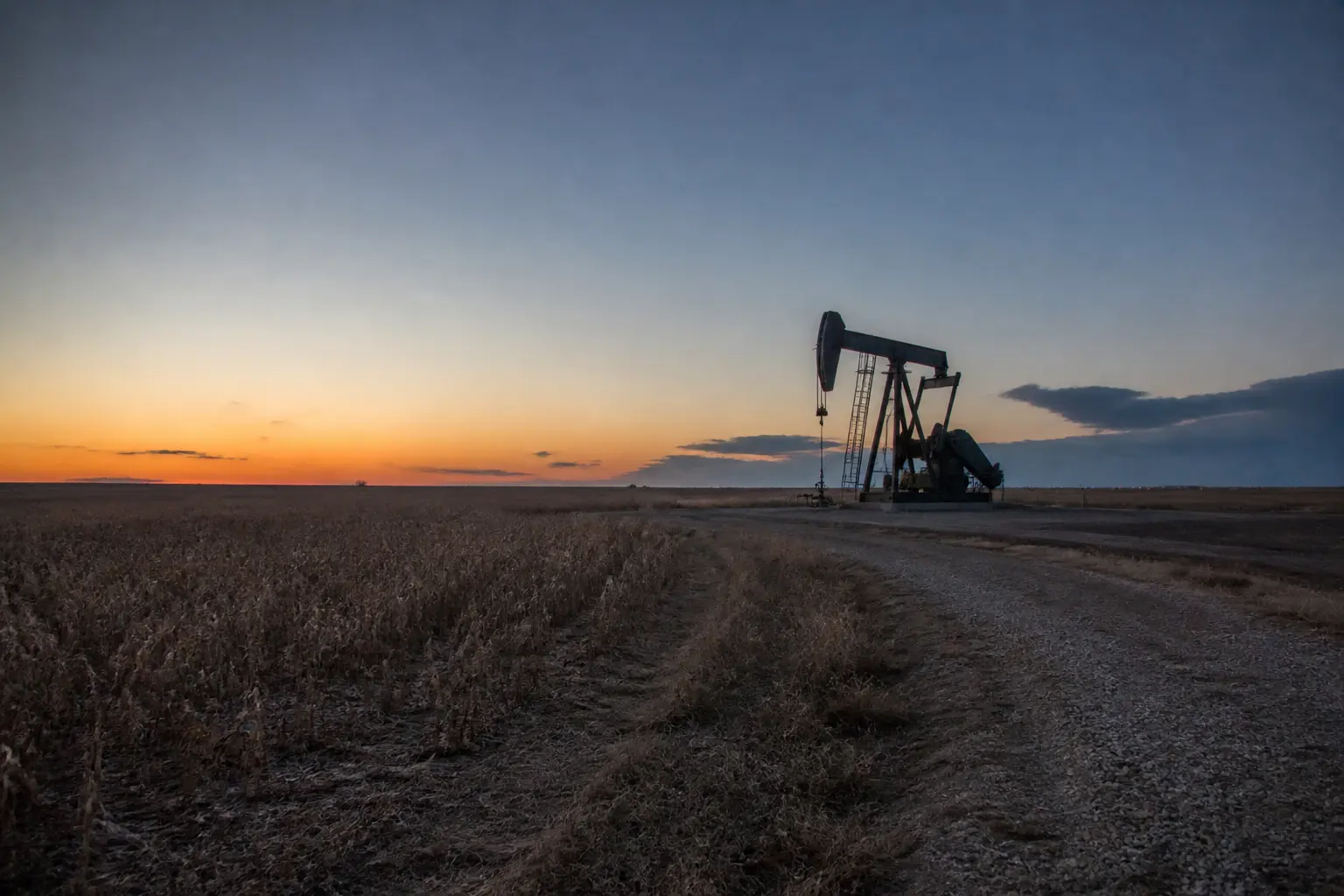
The grievances behind the referendum are old, and they are economic. Alberta holds the world's fourth-largest proven oil reserves, behind Venezuela, Saudi Arabia and Iran, and accounts for more than 80% of Canada's crude oil production, according to The Hindu. Many in the province have long argued that Alberta pays more into the federation than it gets back — and that environmental policies from Liberal governments in Ottawa, aimed at curbing oil extraction, have throttled its main industry.
That frustration hardened into a popular movement in recent years, fed by resentment over pandemic-era restrictions, including mandatory vaccinations, and by inspiration drawn from the MAGA movement across the border. Some conservatives rallied around the idea of secession or autonomy that would let Alberta decide what to do with its oil — and keep the income from it.
The referendum itself arrived in stages. It began as a pair of motions approved in March with nine questions covering immigration, welfare policy and constitutional questions on the federal structure and inter-provincial cooperation. A tenth question, added by a separate order approved in May, dealt with separation. Unlike the yes-or-no format of the earlier questions, it gave voters two options: remain a province of Canada, or instruct the government to "commence the legal process required under the Canadian Constitution to hold a binding provincial referendum on whether or not Alberta should separate from Canada".
In other words, a "yes" would not have taken Alberta out of Canada. It would merely have opened the door to a second, binding referendum. Even that step proved a bridge too far for three in four voters.
Trump's pressure campaign changed the arithmetic
The timing mattered. The vote came amid tension with Washington over trade policy and what Euronews described as Trump's trade war and annexation threats pushing Canadians closer together. Roughly three in four Albertans rejected even starting down the road to separation, the outlet reported — a striking result in a province where the separatist cause had drawn energy from the American right.
The political logic is not hard to follow. When the US president talks openly about making Canada part of the United States and hits Canadian exports with tariffs, the choice before Albertans stops being Ottawa-versus-Edmonton and becomes Canada-versus-Washington. Faced with that framing, voters who might happily punish the federal government at the ballot box chose the flag instead. Supporters of the Forever Canadian campaign, who want Alberta to remain in the federation, waved Canadian flags as they watched results come in at an Edmonton watch party.
A relief in Ottawa, a reckoning in the separatist camp
Carney, who grew up in Edmonton, celebrated the result in personal terms.
"Albertans made a clear choice. They chose unity, to build together, and to take care of each other. Above all, Albertans chose Canada," Carney said.
He said the result would allow Canadians to move forward together and accelerate efforts to diversify trade, develop major infrastructure projects and make Canada a global energy powerhouse, with Alberta at its centre. That is not just rhetoric. According to The Hindu, the referendum result boosts Carney's ambition to get a major pipeline out of Alberta — a project he hopes could revive the economy. A premier who has just campaigned on staying, and won, is a far easier partner for Ottawa than one brandishing a separatist mandate.
For the separatist movement, the defeat cuts deep. The Guardian reported that the result deepened divisions within the separatist camp. And there is a money question hanging over the whole exercise: one Alberta radio show host posted that "someone owes Albertans $130m for this theatrical waste of taxpayers' money" — a figure that captures the irritation even of voters sympathetic to the province's grievances.
Pollster David Coletto told The Guardian that residents felt the referendum was "a distraction away" from what they wanted their government to focus on. He described "almost a general sadness" in the province — a mood in which even federalism's critics seemed to conclude that this was not the fight to have, and not now.
What the result changes — and what it doesn't
The immediate effect is to strengthen Carney's hand at a delicate moment. His government is managing a trade confrontation with its largest customer while trying to reorient the economy toward new markets and bigger infrastructure. A province that produces more than 80% of the country's crude has now formally declined to walk away, removing the risk of a constitutional crisis from an already crowded agenda.
But the underlying bargain remains unsettled. The sentiments that produced the referendum — over fiscal transfers, energy policy and the sense that Ottawa takes Alberta's wealth for granted — have not disappeared with a 76-to-24 vote. The separatist movement's quarter of the vote, nearly one in four Albertans, is a constituency no federal government can simply ignore, and the movement itself now faces a period of infighting over what went wrong.
Two tests now loom. The first is procedural: official results of the non-binding vote are due to be announced on 29 October, and the remaining nine questions — on immigration, welfare and the constitution — still carry political weight even with separation off the table. The second is commercial: whether Carney can convert this show of unity into the pipeline and trade diversification he has promised. Watch the official count, the pipeline decision and the next round of US tariff moves. Together they will show whether this was a turning point for Canadian unity or a pause in an argument that has outlasted every government in living memory.
Sources
This article is based on reporting from:
- The Hindu Canadian unity or separation: why did Alberta province hold a referendum?
- Euronews Alberta’s “no” to separation gives Carney a boost as Trump pressure unites Canadians | EuronewsNewsletterEventsLoaderNewsletterEventsLoaderSearch
- The Guardian Alberta voters overwhelmingly reject plan to leave Canada in referendum | Canada