US weighs Iran attack as soon as Sunday, or a deal with Tehran
Trump says Washington may attack Iran as soon as Sunday or reach a deal, as US forces build up in the Gulf and experts warn of escalation.
 By Henrik LindqvistEurope correspondent 4 min read
Washington — The United States is weighing a return to large-scale military strikes against Iran, with President Donald Trump saying an attack could come as soon as Sunday — or that Washington could instead reach a major deal with Tehran. Neither side has launched major attacks on land-based targets since early September, but a steady build-up of American forces in the Gulf suggests the lull may not last.
Trump said the US might have to "finish the job" against Iran, Al Jazeera reported. A day earlier he had mused publicly about another "little Epic Fury" — the codename for the US operation launched against Iran in late February — if Tehran does not make a deal, while giving no indication of timing.
A war fought at sea, for now
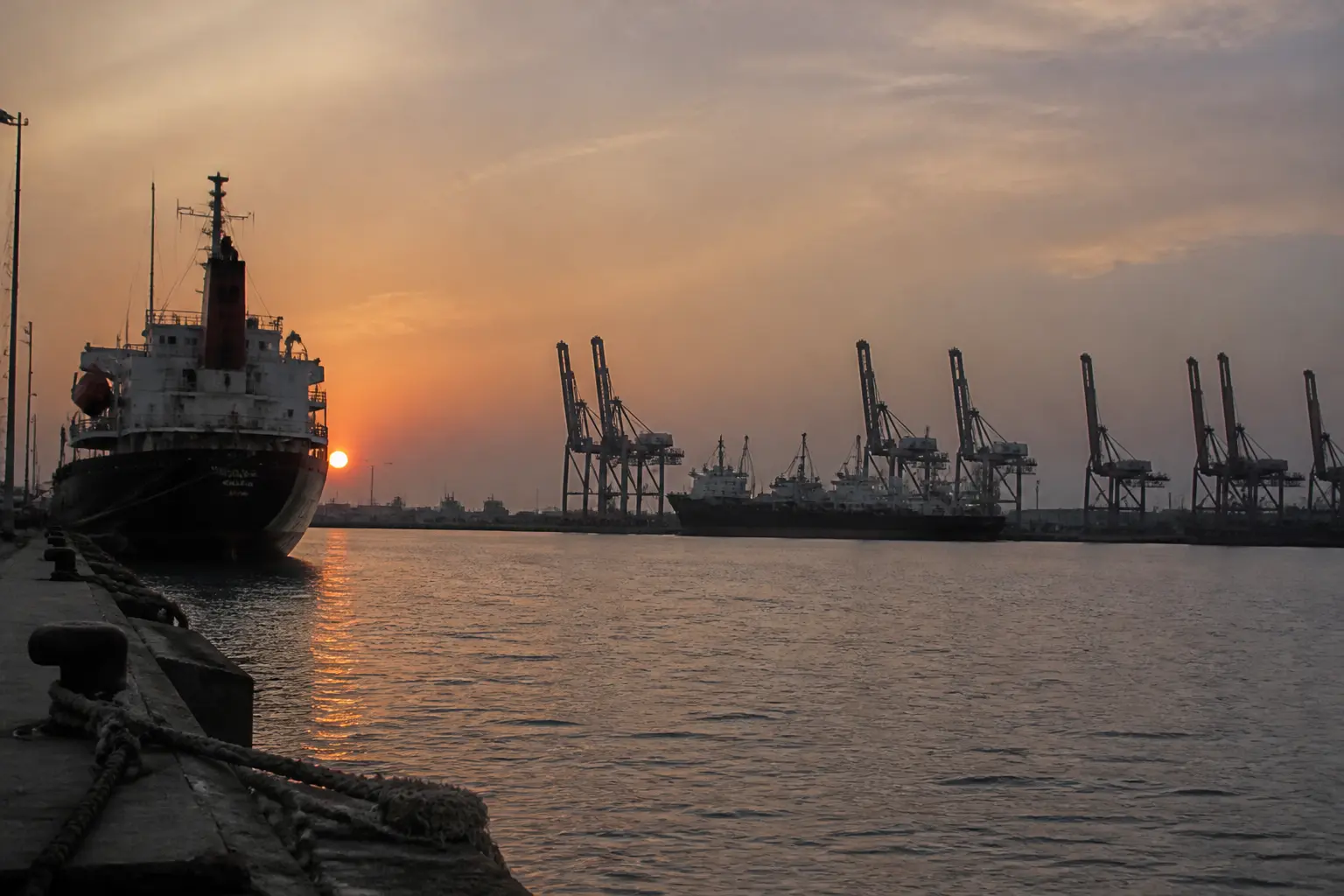
The conflict, now entering its ninth month, has settled into a grinding pattern at sea. According to The Hindu, Washington and Tehran have traded strikes on commercial shipping: the US seeking to enforce a blockade of Iran's ports, the Islamic republic attempting to assert control over the Strait of Hormuz, the narrow waterway through which much of the world's traded oil passes.
That arrangement suits no one. Suzanne Maloney, director of the foreign policy programme at the Brookings Institution, told The Hindu the situation "isn't sustainable in its current state" — the blockade is "creating greater pain for the Iranians", while tying up a large number of American naval assets to enforce it. The war is also unpopular at home, she noted, not least because it has sharply driven up fuel prices, a liability for Trump's Republican Party in the November 3 midterm elections.
Maloney said she is "banking now on the likelihood of strikes shortly after the midterms". Trump, she pointed out, has said publicly he would not strike before the vote — and doing so "wouldn't seem to help him at the polls".
Carriers, Marines and a quiet visit to Tel Aviv
The military preparations, at least, are not subtle. Trump has sent a third aircraft carrier strike group and 10,000 additional sailors and Marines toward the Persian Gulf, The Japan Times reported, to give commanders more options should he restart hostilities. He has repeatedly hinted his forces would resume strikes on Iran after the midterms.
Jason Campbell, a senior fellow quoted by The Hindu, catalogued the signs: the planned deployment of the USS Theodore Roosevelt to West Asia, which could at least temporarily bring the number of carrier strike groups there to three; the dispatch of another Marine Expeditionary Unit; an Israeli air force "show of force" mimicking previous strikes on Iran; and a high alert status for Israeli forces. Washington has also issued warnings to Americans in the region.
Last week Defence Secretary Pete Hegseth made an unannounced stop in Israel — which launched the war alongside the US — meeting Prime Minister Benjamin Netanyahu days before the Israeli leader's own sensitive reelection bid. Staffing at US bases in the Middle East, which have been hit hard by Iranian counterstrikes, has reportedly been reduced.
"This is admittedly an expansive set of actions to take if the intent is to simply pressure Iran to the negotiating table," Jason Campbell, a senior fellow at the Institute, told The Hindu — while cautioning that on the timing of renewed strikes, it is "impossible to predict".

What Washington can — and cannot — do
Campbell cautioned that Trump's options are narrower now than earlier in the conflict. Damage to US bases in the region, he said, has made any potential ground operation far harder: there is, in his assessment, no safe place to stage the thousands — in some scenarios tens of thousands — of troops such an operation would require.
The analysts quoted by The Hindu were also blunt about the larger picture: there is unlikely to be a military solution for either side in what they described as a devastating conflict. That is a polite way of saying that eight months of war have produced a blockade, a contested strait and higher petrol prices, but no exit.
The region feels it first
The effects of any renewed escalation would radiate outward quickly, starting with the Gulf states that host American forces and sit across the water from Iran — a vulnerability examined in Wide World News's earlier reporting on how Gulf states are bracing for a possible return to the war. Tehran has also signalled it could widen the economic battlefield, with officials warning it is prepared to strike Gulf undersea cables.
Yemen's Iran-backed Houthi movement is already testing the edges. The Saudi-led coalition said it intercepted and destroyed an incoming Houthi ballistic missile over Riyadh, according to Al Jazeera, while the group warned travellers to avoid the Saudi capital's international airport, declaring it an unsafe military target. Campbell noted that Washington may also be anticipating strikes by Iran or its Houthi allies — a reminder that escalation, if it comes, is unlikely to be one-directional. Diplomatic efforts to head off a resumption have so far been aspirational: an Istanbul summit recently urged diplomacy over new strikes, without evident effect.
Beyond the region, the stakes are measured at the pump and in the freight rates. The war's disruption of Hormuz shipping has already fed into fuel costs that are weighing on American voters; a return to strikes on land targets would test those pressures further, and with them the patience of governments that have spent months urging restraint.
What happens next
For now, everything hangs on two dates and one man. Trump has floated Sunday for either an attack or a deal — a fork in the road he has defined entirely on his own terms. Failing that, the November 3 midterms are the marker analysts keep returning to: the moment after which, by the president's own hints, restraint loses its electoral value. Whether Tehran receives an offer it can accept before then is the one question on which the sources offer no answer at all.
Sources
This article is based on reporting from:
- Al Jazeera Iran war live: Saudi downs Houthi ballistic missile targeting Riyadh | US-Israel war on Iran News | Al JazeeraplayShow navigation menuplaysearchcaret-leftcaret-rightblinking-dotshare-nodesfacebookxwhatsapp-strokecopylinkgoogleinfofacebooktwitteryoutubeinstagram-colored-outlinerssblueskytiktok-colored-outline
- The Japan Times Trump prepares for Iran escalation after U.S. and Israeli elections
- The Hindu Signs point to renewed major U.S. military operations against Iran